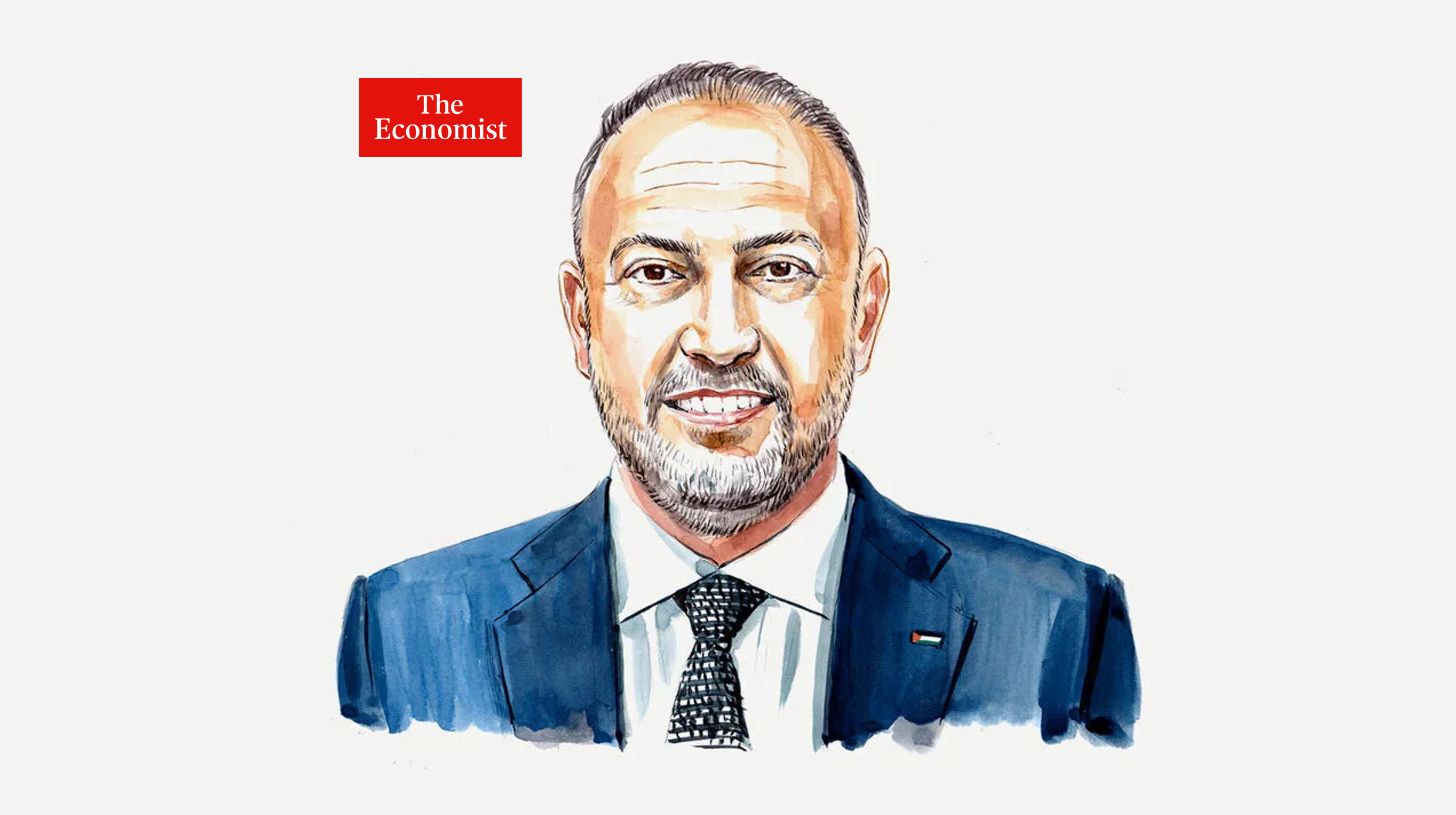
Illustration: Dan Williams, The Economist
THE MIDDLE EAST is ablaze, and while the world’s attention is fixed on the war started by Israel and America against Iran and expanded by Iran to engulf Arab states that opposed and tried to prevent it-a permanent transformation is unfolding in occupied Palestine. This is not accidental. It is a strategic decision by Israel to establish regional dominance and deal a deadly blow to Palestinian statehood under the cover of war.
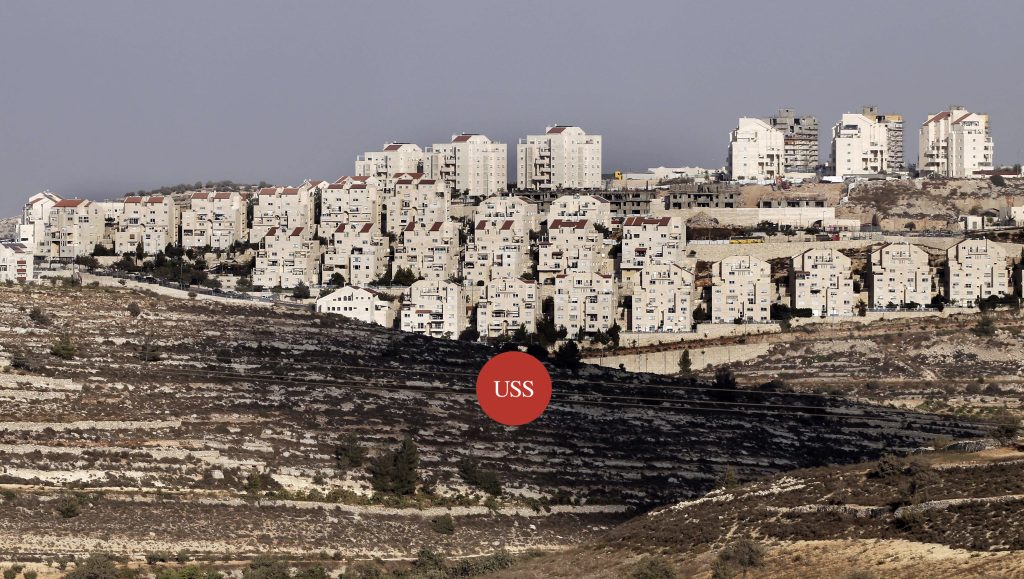
In the West Bank, settlement expansion is accelerating at a historic pace. Land confiscations are increasing under new policies approved by the Israeli government. Israel’s leaders describe this process as rolling out Israeli sovereignty. International law has another term: annexation.
One of the most consequential developments is the El Plan, under which construction would, in effect, divide the West Bank in two and sever East Jerusalem from its Palestinian hinterland. A continuous Israeli settler presence would stretch from Jerusalem to the Jordan Valley. Israeli settlements are not only illegal under international law but are designed to obstruct Palestinian selfdetermination. When Binyamin Netanyahu, Israel’s prime minister, signed an agreement to push ahead with the El Plan in September 2025, he said: “There will never be a Palestinian state. This place is ours:’
Meanwhile, settler terrorism against Palestinian civilians across the West Bank has reached unprecedented levels, backed by the state and increasingly involving the active participation of the Israeli army. The UN is reporting that Israeli army reserve units drawn from settlers are acting as de facto vigilante militias in the West Bank. There can be no political solution without dismantling Israel’s colonial-settler enterprise in Palestine.
The acceleration of annexation in the wake of ceasefire and peace talks is a familiar pattern. In 2002, 57 Arab and Muslim-majority states offered Israel full recognition and normalisation in exchange for ending the occupation, establishing a Palestinian exchange for ending the occupation, establishing a Palestinian state and a just resolution for Palestinian refugees. The Saudi-led Arab peace initiative was the most comprehensive proposal the region has produced, but Israel rejected it without consideration.
A ceasefire was agreed in Gaza following the war that started in October 2023, yet Israel has killed hundreds of Palestinians since it came into effect, a violation that has gone mostly unchallenged. More than 2m people live largely in tents, aid is severely restricted and much of the civilian infrastructure-homes, hospitals and universities-lies in ruins. The same strategy of maximum damage is now being deployed in Lebanon.
More than 140 countries have endorsed the New York Declaration on Palestine, a UN-backed roadmap for a “two-state solution” to the Israeli-Palestinian conflict; the International Court of Justice has concluded that Israel’s occupation is unlawful; and a growing number of European governments, including Britain, have recognised the State of Palestine. Together, these steps suggested a gradual shift in international policy. Yet Israel’s response was, again, escalation. These outcomes are not the accidental byproducts of a security campaign. They reflect long-standing, expansionist political objectives.
What we are witnessing today is not simply about security concerns. It is a sLruggle over Lhe fuLure poliLical order of Lhe Middle East, and with it the fate of the rules-based order established after the second world war. Each time a potential political solution emerges, however fragile, it risks being overtaken by crisis. That cycle can only be broken if Israel faces accountability, as any other state committing the same violations would.
The Palestinian question is not a sidenote in an unstable region. It remains its central unresolved conflict. Every attempt to construct regional security while leaving Palestine aside has ultimately failed. Action is now required on two fronts.
First, the current war in the Middle East must end. A ceasefire is not only a humanitarian imperative-it is a strategic necessity. Arab security must be guaranteed as a central pillar of any settlement.
That conversation, including the activation of the 1950 Arab Collective Defence and Economic Co-operation Treaty, is long overdue.
Second, the international community must upgrade its rhetorical support for a two-state solution into concrete measures. Comprehensive sanctions should be imposed on the ecosystem of occupation and the government driving it. Trade and investment linked to illegal settlements must be banned. The advisory opinion of the International Court of Justice should be fully applied.
At the same time, the international community must support the nucleus of the Palestinian state that already exists. Israel’s campaign to collapse the Palestinian Authority threatens not only Palestinian statehood but regional security and any future political agreement. Palestinians, and only Palestinians, are going to govern Palestine, including Gaza. Democratic renewal is first and foremost a Palestinian demand and interest-and a foundation of the future Palestinian state.
The tools already exist and were beginning to be used: recognition of Palestinian statehood, arms embargoes, suspension of trade talks, sanctions on settlers and their products, and renewed scrutiny by international courts. Hesitating has only ever led to more ambitious action by Israel.
The cycle of wars in the Middle East will not end by managing symptoms. It will only be broken by confronting its cause: the unresolved question of Palestine, a question of inalienable rights, of law and ultimately of accountability.
This is a cause the Palestinian people have long struggled for, with steadfastness and at enormous cost. Until it is addressed, instability and suffering will persist. When it is addressed, the path to a just and lasting peace can finally be laid.
Husam Zomlot is the Palestinian ambassador to Britain.
The Economist | 19 March 2026 – Full article: https://www.economist.com/by-invitation/2026/03/19/israels-annexations-under-cover-of-war-must-be-stopped